Cerro Concepción & Cerro Alegre
Alegre and Concepción hills are usually visited together and are the best places to start if this is your first time in Valparaíso. The two hills sit side by side above the port, so you can explore them on foot without losing time moving between distant areas.
This part of the city grew during Valparaíso's 19th-century port boom when British, German, and other European families settled on the hills. You can still see that influence in the old façades, restored houses, the Lutheran Church, and some streets around Paseo Atkinson and Paseo Gervasoni on Cerro Concepción. On Cerro Alegre, classic stops include Paseo Yugoslavo, Palacio Baburizza, and Ascensor El Peral.
This is also one of the easiest areas to see Valparaíso's street art naturally, without turning the walk into a separate mural hunt. Painted walls, staircases, doors, and narrow passages appear as you move through the hills. Templeman Street, Pasaje Gálvez, Pasaje Bavestrello, the area around Paseo Atkinson, and the streets between Cerro Concepción and Cerro Alegre are all worth paying attention to.
Some murals are mainly decorative, while others refer to local life, port history, social issues, or neighborhood identity. A guide helps because most walls lack explanations, and some details are easy to miss if you only follow a map or stop for quick photos.
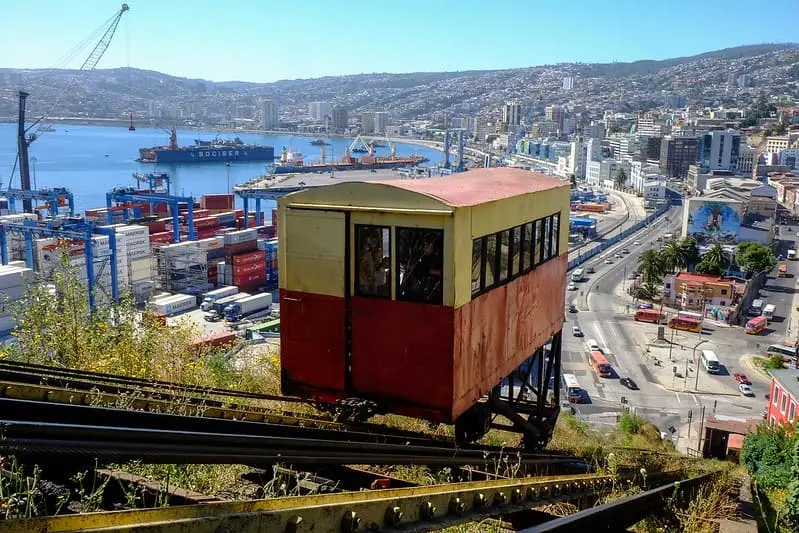
The historic ascensores are another important part of this walk. They connect the lower port area with the hills, and several useful ones are close to Cerro Alegre and Cerro Concepción. Ascensor Concepción links the lower streets with Paseo Gervasoni on Cerro Concepción. Ascensor El Peral takes you up toward Paseo Yugoslavo and Palacio Baburizza on Cerro Alegre. Ascensor Reina Victoria is nearby and fits well if your walk includes Paseo Dimalow or the upper part of Cerro Alegre.
Plaza Sotomayor and the Port Area
Plaza Sotomayor is the main square near the port and a key place for understanding Valparaíso as a maritime city. It is not the most colorful or atmospheric part of the visit but gives important context before or after walking through the hills.
The square is closely linked to Chilean naval history. In the center stands the Monument to the Heroes of Iquique, dedicated to the Chilean sailors who fought in the Battle of Iquique during the War of the Pacific in the late 19th century. The best-known figure connected with this story is Arturo Prat, one of Chile's national naval heroes.
Around Plaza Sotomayor, Valparaíso feels different from the hills above. Here you see official buildings, the Chilean Navy headquarters, the port entrance, buses, taxis, workers, and people moving through the lower city. It is less colorful than Cerro Alegre or Cerro Concepción but shows the working side of Valparaíso.
You do not need much time here. A short stop is enough to understand why Valparaíso became important: it grew around the sea, the port, naval history, and trade routes connecting Chile with the Pacific.
La Sebastiana
La Sebastiana is Pablo Neruda's house-museum in Valparaíso, located on the upper side of Cerro Bellavista, close to Cerro Florida. It is a little outside the usual Cerro Alegre and Cerro Concepción walking route, so it is best included if you have enough time or a particular interest in Neruda.
Neruda bought the house in 1959 when it was still unfinished. He turned it into one of his personal homes, full of objects, paintings, maps, maritime details, and unusual pieces from his collections.
One of the main reasons to visit La Sebastiana is the view. From the house and the surrounding area, you get a wide look over Valparaíso, the bay, the port, and the hills.
Before planning the visit, check the current opening hours, as museum schedules can change.